

Sensitivity to Programming
Out of the three lifts, the Bench Press is the most individualised when it comes to programming due to its heavy sensitivity to changes. There are several reasons why this is the case.
These reasons include:
1. Smaller muscle groups involved: Compared to the squat and deadlift which utilize the majority of the entire body, the bench press (not including the arch and leg drive) mainly targets the upper body muscles such as the chest, shoulders, and triceps. As such, this allows for a higher threshold of prescription for the bench press as smaller muscles recover faster than larger ones.
2. Joint Stress: By using smaller muscle groups, the joints and soft tissues are also smaller than their larger counterparts. If rapid changes within the programme are made (be it in volume, intensity, or frequency), the risk of injury may increase.
3. Technique: Compared to the squat and deadlift, the technique and setup of the bench press are much more volatile. A slight deviation from their usual technique can make a lift unexpectedly difficult or even cause them to fail a weight they would normally handle with ease.
Programming Considerations
Given the bench press’s sensitivity to programming, we as powerlifting coaches need to have a solid understanding of how to write, adjust, and fine-tune programmes effectively. Since programming must be individualized, several key factors guide our decision-making process. When starting and writing a fresh programme for a new athlete without much past data, these are the key factors I look for.
Assuming these lifters are equally strong, these factors include:
1. Weight Class: A smaller athlete (52kg) can handle more workload compared to a larger athlete (105kg). As previously mentioned, smaller muscles recover faster than larger ones, and this principle applies not only to muscle groups but also to weight classes.
2. Leverages: An athlete with shorter arms can manage a higher workload compared to one with longer arms. The longer arms create a greater moment arm, which increases the force needed to lift the weight on the barbell, making it more challenging than for an athlete with shorter arms.
3. Range of Motion: According to the Work formula, Work is the product of displacement and force. Assuming force output between lifters is constant, the athlete with a larger displacement (range of motion) has more work done, which in turn, can affect the recoverability of the lifter assuming they do the same programme.

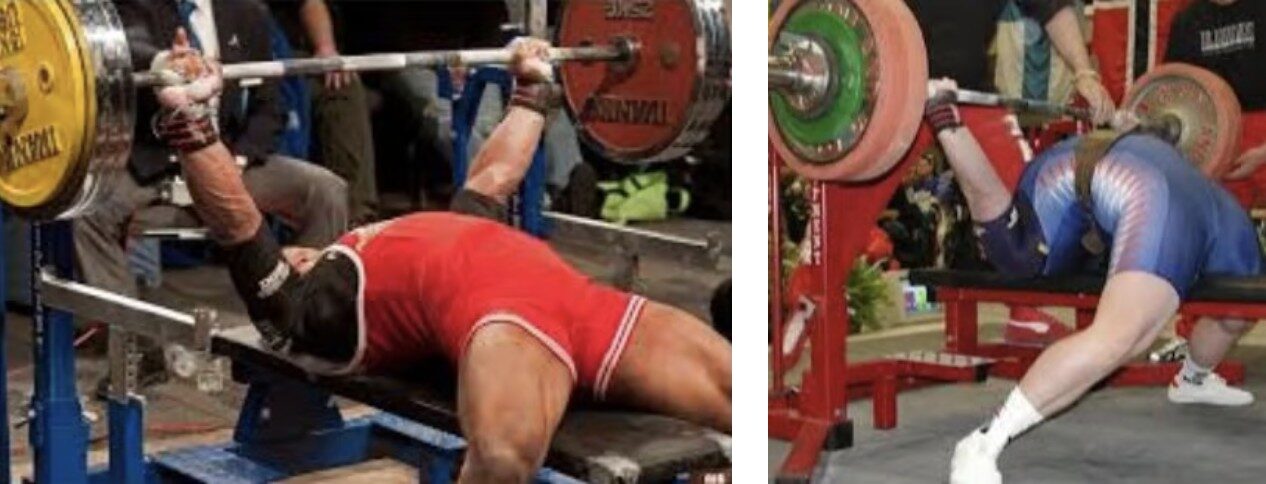
4. Technical Proficiency: The athlete with better technique has a higher volume threshold compared to the athlete with poorer technique (scapula elevating, arch collapsing, overpressing).
Programming Layout
With the factors addressed, it’s time to establish the foundation of the program. Three key variables form the core of any program: frequency, volume, and intensity.
Frequency: Number of Bench/Upper Body Sessions a week
Volume: Number of Sets and Reps a week
Intensity: Absolute (% of 1RM/E1RM) and Relative (RPE)
Combining the 3 variables can create a programming model that looks like this.
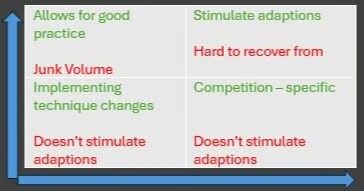
| A simple 3-day layout can look like this Day 1 Tue: Secondary Bench – Competition Bench Press 1 x 3 @6, 2 x 7 -10% Day 2 Thur: Tertiary Bench – Tempo Bench Press 1 x 1 @7, 3 x 4 @4, 5, 6 Day 3 Sat: Primary Bench – Competition Bench Press 1 x 1 @7, 1 x 5 @7, 3 x 5 -7.5% |
| A simple 4-day layout can look like this Day 1 Mon: Tertiary Bench – Tempo Bench Press 1 x 1 @6, 1 x 3 @6, 3 x 3 – 5% Day 2 Tue: Secondary Bench – Competition Bench Press 1 x 3 @6, 2 x 7 -10% Day 3 Thur: Tertiary Bench – 3CT Bench Press: 1 x 1 @7, 3 x 3 @5, 6, 7 Day 4 Sat: Primary Bench – Competition Bench Press 1 x 1 @7, 1 x 5 @7, 3 x 5 -7.5% |
| A simple 5-day layout can look like this Day 1 Mon: Tertiary Bench – Tempo Bench Press 1 x 1 @6, 1 x 3 @6, 3 x 3 – 5% Day 2 Tue: Secondary Bench – Competition Bench Press 1 x 3 @6, 2 x 7 -10% Day 3 Wed: Tertiary Bench – 3CT Bench Press: 3 x 4 @5, 6, 7 Day 4 Fri: Quaternary Bench – Tempo Bench Press 3 x 1 @3, 4, 5 Day 5 Sat: Primary Bench – Competition Bench Press 1 x 1 @7, 1 x 5 @7, 3 x 5 -7.5% |
Keep in mind that with a consistent training structure, results become more predictable and easier to replicate. This enables coaches to gather relevant data and use it to create an effective training/competition plan.
To be consistent, the lifter should follow the prescribed programme to a tee (finishing accessories and sticking to RPE prescriptions) and train on the days allocated. If not, the athlete can find themselves either over-performing or underperforming. Due to the unpredictability, the athlete and coach can find it hard to find the underlying cause of the issue, which will be covered in the next section.
Programming Adjustments
Compared to the squat and deadlift, the bench press can be programmed more frequently and with higher intensity, thanks to its faster recovery rate from the factors mentioned earlier.
The goal is to strike a balance between fatigue and conditioning, ensuring the athlete can perform the bench press in their optimal state.
When considering the three core variables of programming, the focus should be on how these variables influence the balance between fatigue and conditioning.
In this context:
Frequency: Number of rest days before primary bench session
- Too many rest days can cause athlete to feel deconditioned
- Too little rest days can cause athlete to feel underrecovered
Volume: Number of sets and reps before primary bench session
- Too much volume can cause athlete to feel underrecovered
- Too little volume can cause athlete to feel deconditioned
Intensity: RPE/% of 1RM before primary bench session
- Too much intensity can cause athlete to feel underrecovered
- Too little volume can cause athlete to feel deconditioned
When fine-tuning and making adjustments to programmes, it is important to look at the data given to you. This involves the athlete completing programming spreadsheets and providing feedback. Based on their feedback, we can identify the key factor needed for the athlete to progress consistently.
If the athlete arrives at their primary session feeling detrained, deconditioned, or finds the barbell unusually heavy, the coach may consider introducing higher intensity or increased frequency before the primary session.
On the other hand, if the athlete reports feeling under-recovered before their primary session, the coach should reduce either volume, intensity, or frequency depending on the lifter’s specific needs and the considerations listed earlier.
Bridging Stimulus
The secondary day’s programming should be carefully crafted to ensure the athlete enters the primary session with the ideal balance of recovery and conditioning. To achieve this, I use several key tools:
Frequency: Adjusting bench sessions instead of days first. It’s important to determine whether the athlete needs a rest day or two before their primary session. Once we identify the optimal rest period, sessions can be rearranged to align with the primary session.
Volume: Repetition schemes are tailored to the athlete’s recovery capacity. Athletes who recover well can handle higher rep schemes, while those with lower recoverability benefit from lower rep schemes. If even lower rep schemes are too taxing, extending rest periods or incorporating machines are effective tools to enhance recoverability.
Intensity: Prescriptions of %1RM for competition bench press can easily be prescribed if the athlete requires higher bouts of intensity. For athletes needing higher intensity, prescribing load capped competition singles can help reach that goal. Conversely, if high intensity isn’t required before the primary session, variations (long pause, tempo, larsen, spoto) can be introduced to manage the weight on the bar while ensuring the workout remains challenging.
By combining these tools with the core programming variables and considering the athlete’s specific needs, we can ensure consistent performance in the primary session. However, this process requires collaboration between coach and athlete. The athlete’s feedback is essential, and the coach must make informed adjustments based on the data provided.
Conclusion
It’s essential to understand how the athlete moves and what the athlete needs before simply entering numbers into a spreadsheet. By analysing their previous training data and making informed decisions based on their specific programming needs, we can create a straightforward yet effective training plan.
Ultimately, understanding the nuances of the bench press and how to program effectively for it can lead to significant gains in performance. By meticulously analysing each athlete’s response to training and making informed adjustments, coaches can help lifters reach their full potential on the platform.