
Training Smarter, Not Just Harder
Continuing to exercise during pregnancy is not only safe for most women – as we explored in our previous blogs – it’s genuinely beneficial. But staying active during pregnancy also means staying attuned to your body in a way that might feel a little different to how you’ve trained before. This isn’t about fear or restriction. It’s about having the right information so you can keep moving with confidence.
Think of this as your practical guide to knowing what’s worth paying attention to, what warrants a conversation with your care team and what’s simply your body adapting to one of the most remarkable things it will ever do.
What Your Pelvic Floor Might Be Telling You
One of the most common things we see in women who train during pregnancy is pelvic floor symptoms – and one of the most important things we can tell you is that they are information, not failure.
Symptoms worth paying attention to include:
- Leaking with exercise, lifting, jumping or coughing
- A sensation of heaviness, pressure or bulging in the pelvic region
- Pelvic girdle pain or pubic symphysis discomfort during or after training
- Lower back pain that wasn’t there before or has significantly worsened
None of these are reasons to stop training altogether – but all of them are reasons to connect with a Pelvic Floor Physiotherapist and your women’s health Exercise Physiologist. These symptoms are your body asking for support and with the right guidance most women can continue training while addressing what’s going on.
Getting to Know Your Baby’s Movements
From around 18-20 weeks most women begin to feel their baby move and by the third trimester fetal movement is an important indicator of wellbeing. It’s natural to wonder whether exercise affects fetal movement – and the short answer is that some change during and immediately after exercise is normal. Fetal heart rate typically rises with maternal exercise, much like your own.
What’s worth knowing:
- Familiarise yourself with your baby’s normal movement patterns – every baby is different
- If you notice a significant reduction in movement during or after exercise, stop and rest
- If movement doesn’t return to normal within a couple of hours, contact your midwife or obstetrician
- Reduced fetal movement is always worth reporting – it’s never an overreaction to check in
When to Stop and Seek Support
Most training sessions during pregnancy will feel unremarkable – and that’s a good thing. But there are some symptoms that are always a reason to stop what you’re doing and seek prompt medical review:
- Vaginal bleeding or fluid leaking
- Chest pain or heart palpitations
- Severe shortness of breath beyond normal exercise exertion
- Dizziness, faintness or loss of balance
- Calf pain or swelling
- Severe headache
- Uterine contractions or significant abdominal pain
- Sudden decrease in fetal movement
These are not common occurrences during exercise in healthy pregnancies – but knowing them means you can act quickly and confidently if something doesn’t feel right.
Is This Normal? Understanding What You’re Feeling
This is something worth sitting with because it’s not always straightforward. Pregnancy brings a lot of new sensations – round ligament pain, breathlessness, fatigue, aching and general discomfort are all common and don’t necessarily mean something is wrong. The key distinction is:
- Discomfort tends to be familiar, manageable and resolves with rest or modification
- Warning signs tend to feel sudden, unfamiliar, significant or persistent
When in doubt, stop and check in – with your body and with your care team if needed. There is never a wrong time to ask a question.
You Shouldn’t Have to Figure This Out Alone
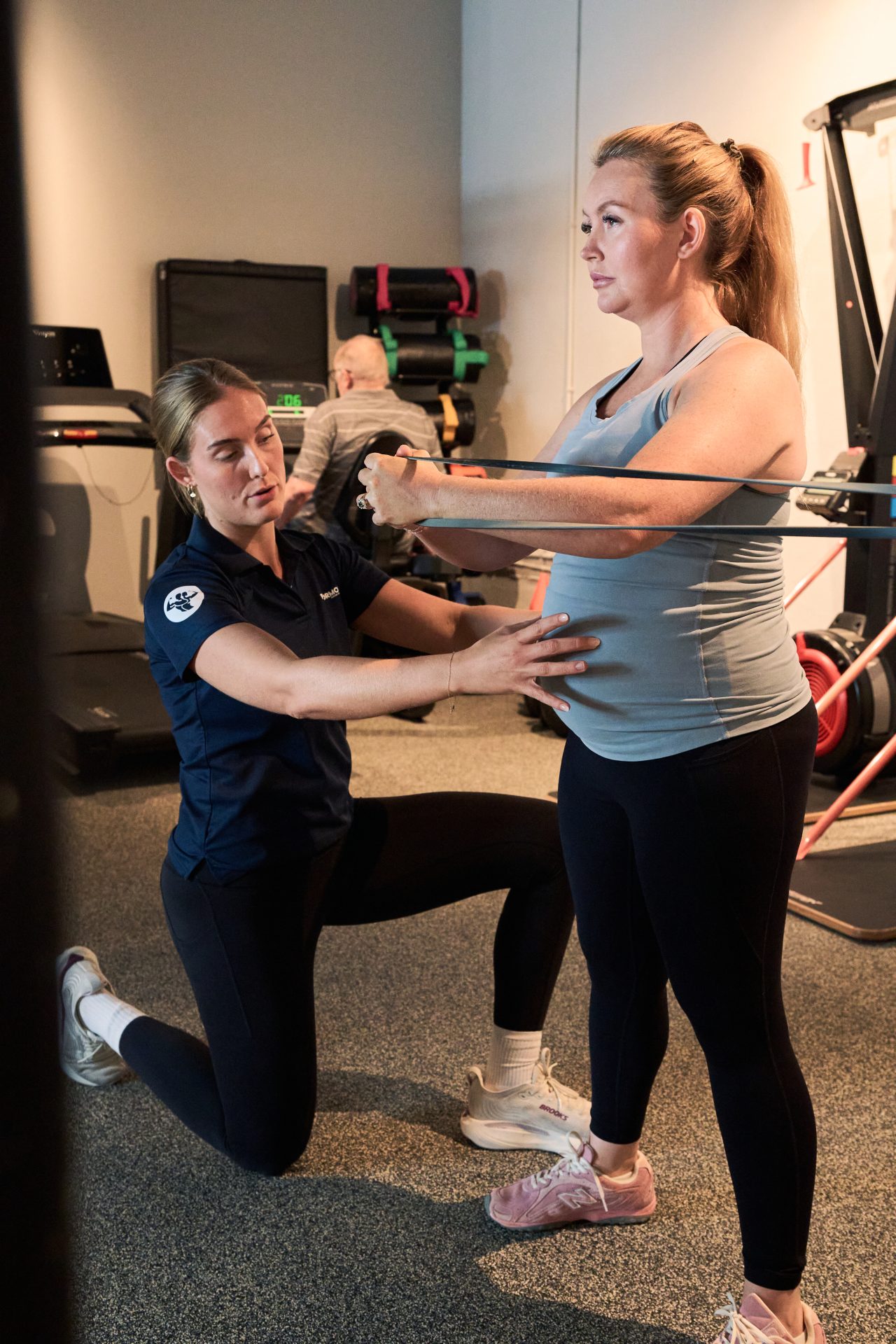
Knowing what to look for is one part of the picture. Having people around you who can help you interpret what you’re experiencing is another. A women’s health Exercise Physiologist can help you understand your body’s responses during training, modify your program when needed and work alongside your Pelvic Floor Physiotherapist and obstetric team to make sure you’re supported from every angle.
At Performotions we work with women at every stage of pregnancy – helping them stay active, feel informed and train with confidence. If something doesn’t feel right or you’d simply like some guidance on exercising safely during your pregnancy, we’d love to hear from you.
Written by Annie Daly, Senior Exercise Physiologist