
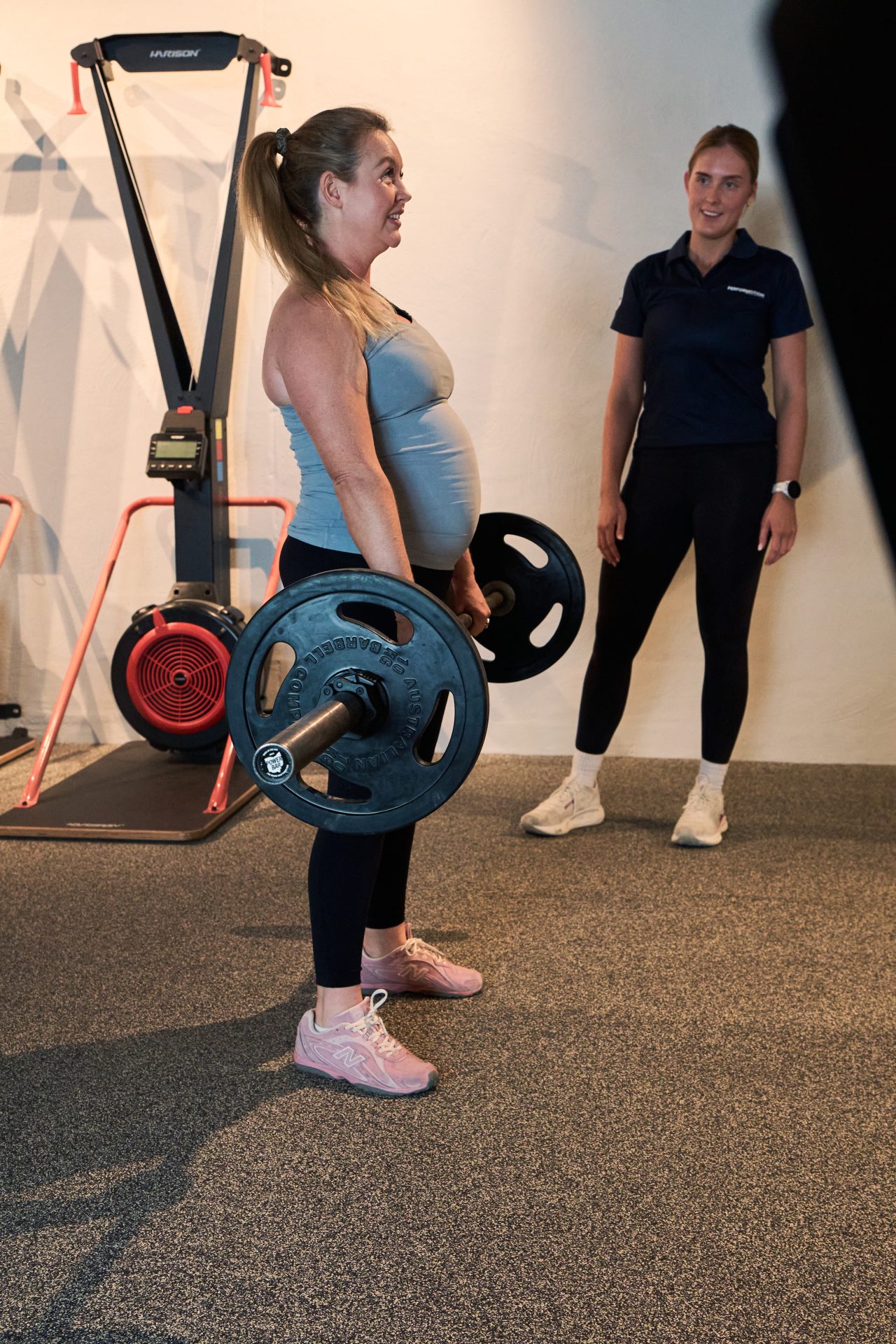
This is part three of our series on heavy lifting in pregnancy. If you missed parts one and two, you can find them here Part One and Part Two
For Powerlifters and Competitive Strength Athletes
If competitive lifting is part of your identity: Powerlifting, Olympic weightlifting, CrossFit – this section is especially for you.
You train at loads that most clinical guidelines weren’t written with in mind. You might be squatting, deadlifting or cleaning weights that exist well outside the frame of reference most standard pregnancy advice was built around. And navigating that gap between what the guidelines say and what your training actually looks like can feel isolating. It’s one of the reasons having a women’s health Exercise Physiologist who understands high performance sport in this context is so valuable.
The “Occupational Load” Gap
Safe Maternity Guidelines in Australia reference occupational load limits during pregnancy, typically in the context of manual handling in workplace settings. Competitive strength athletes regularly exceed these loads in training. Until recently, there has been very little research that directly addresses this population and that gap has left a lot of athletes without clear, evidence-informed guidance.
Prevett et al. (2023) is one of the most relevant studies we have. Of the nearly 700 pregnant heavy lifters surveyed:
- 72% continued Olympic lifting during pregnancy
- 71% trained in the supine position
- 34% used the Valsalva manoeuvre
- 89% returned to weightlifting postpartum (average: 3.2 months)
Across this group, perinatal outcomes were typical. There was no significant increase in complications for those who continued heavy training and those who stopped training earlier actually experienced more complications, not fewer.
The Dalhaug et al. (2025) study, while not exclusively involving competitive powerlifters, included both elite and recreational athletes completing heavy load protocols. The absence of adverse fetal responses adds meaningful reassurance to this picture. Though it’s worth acknowledging this is a single study and more research in this specific population is still needed.
What This Might Mean for You & Key Takeaways
The research doesn’t support a one size fits all weight limit. What matters more is your individual response, your training history, your pelvic floor health and having a team who understands both pregnancy and sport. Technique will naturally evolve as your body changes, shifts in stance, range of motion and how movements feel are your body communicating, not a sign that something is wrong.
The Valsalva conversation is more nuanced than blanket avoidance suggests, and incorporating pelvic floor awareness and breath regulation into your lifting is something a women’s health Exercise Physiologist and Pelvic Floor Physiotherapist can help you explore in a way that’s specific to how you train. Pelvic floor symptoms like leaking under load, heaviness, or pelvic girdle pain are information worth acting on – not something to push through. And when it comes to competition, there’s no universal answer. It’s a personal, nuanced conversation best had with your full care team.
What ties all of this together is having the right people around you. A women’s health Exercise Physiologist, a Pelvic Floor Physiotherapist and your obstetric team working collaboratively means you’re making informed decisions with confidence, not guessing.
How a Women’s Health Exercise Physiologist Can Support You
Exercise during pregnancy isn’t one-size-fits-all and it shouldn’t feel that way. A women’s health Exercise Physiologist can walk alongside you through all of this: helping you understand your body’s responses, adapting your programming as things change and making sure you feel genuinely informed rather than simply told what to do. When that’s paired with pelvic floor physiotherapy support and your obstetric care team, you get guidance that is evidence-based and truly individualised, which is exactly what you deserve.
At Performotion, we work with women across the full spectrum. From those new to exercise navigating pregnancy for the first time, to competitive athletes who want to keep training with confidence. We’d love to be part of your team.
Bringing It All Together
Pregnancy is not a reason to stop lifting. For most healthy women, resistance training – including heavy resistance training – throughout pregnancy is not only safe but genuinely beneficial for both mum and baby. What shifts is the approach: staying attuned to your body, building the right team around you and making informed decisions that are specific to you – not blanket rules that were never designed with you in mind.
The research is catching up with what so many strong women have known intuitively. You don’t have to choose between being pregnant and being an athlete. You just need the right support to do both well.
Written by Annie Daly, Senior Exercise Physiologist
References:
Prevett C, Kimber ML, Forner L, de Vivo M and Davenport MH. Impact of heavy resistance training on pregnancy and postpartum health outcomes. International Urogynecology Journal. 2023;34(2):405-411. doi:10.1007/s00192-022-05393-1
Dalhaug EM, Sanda B, Bø K, Brown W and Haakstad LAH. Pushing limits: the acute effects of a heavy-load resistance protocol and supine exercise on fetal well-being. BMJ Open Sport and Exercise Medicine. 2025;11(3):e002639. doi:10.1136/bmjsem-2025-002639
Dalhaug EM, Sanda B, Bø K, Brown WJ, Øvstedal K, Brevik-Persson S and Haakstad LAH. Is fetal well-being jeopardised during high-intensity interval training? BMJ Open Sport and Exercise Medicine. 2025;11:e002496. doi:10.1136/bmjsem-2025-002496