
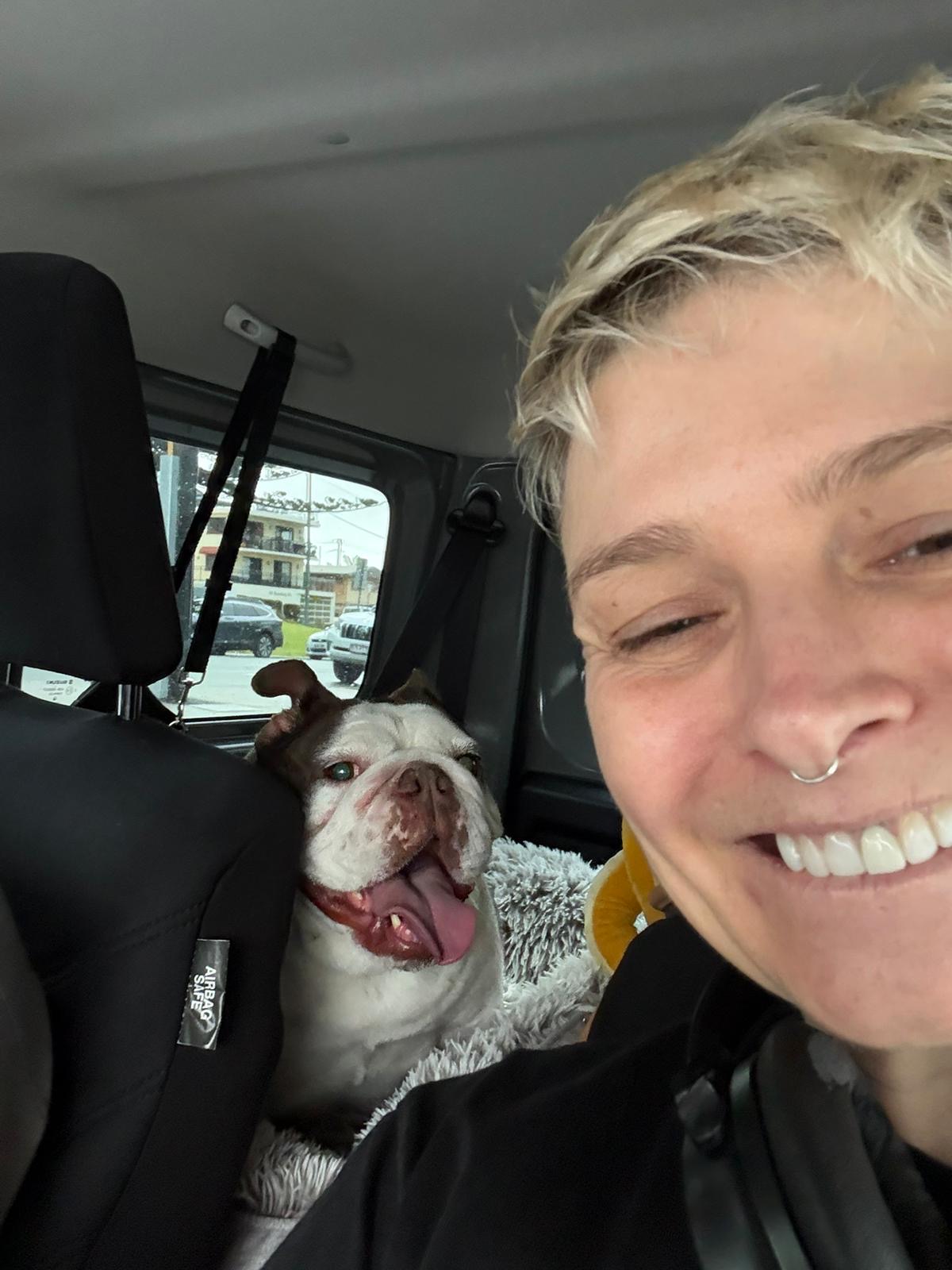
I am an Exercise Physiologist and Powerlifting Coach. I have spent my career helping people understand their bodies, build strength, and navigate chronic illness. I know how the body works. I know what hormones do. I know what burnout looks like.
My 40s have still been the hardest years of my life.
It Started Before My 40s
To understand my 40s, you need to know what came before them.
At 30, I had a major burnout. I rebuilt from that slowly and deliberately, and I came out the other side with more self-awareness than I had going in. I understood my limits better. I understood my nervous system better. I thought I had a handle on things.
Then came PMDD (premenstrual dysphoric disorder), the severe hormonal variant of PMS that hits neurodivergent women disproportionately hard. By 41 it was difficult to manage. By 43, perimenopause had arrived and brought everything with it.
What most people do not tell you about perimenopause when you are AuDHD is that it does not ease in gradually. It moves through every coping strategy you have built and dismantles them one by one.
The Moment I Knew
I felt it coming before I could name it. Worse periods. Heavier. More painful. Hormones fluctuating in ways my body had not experienced before.
The moment I knew something was seriously wrong was when my nervous system stopped coping.
The sensory overstimulation became constant and unmanageable. Sounds that were tolerable became overwhelming. Environments I had navigated for years started feeling like too much. My autistic traits, the ones I had learned to work with rather than against, started coming through in ways I could not regulate. Not because I stopped trying. Because my hormones were fluctuating so dramatically that my nervous system had no stable ground to stand on.
For neurodivergent women, this is one of the most underrecognised parts of perimenopause. Oestrogen plays a direct role in regulating dopamine and serotonin, the neurotransmitters that underpin attention, emotional regulation, and sensory processing. When oestrogen fluctuates, those systems become less stable. For a woman who already has a sensitive nervous system, the impact is significant. Research confirms that autistic and ADHD women experience perimenopause symptoms more severely and at younger ages than neurotypical women, with executive function, emotional regulation, and sensory tolerance all disproportionately affected.
I was not imagining it. My brain chemistry was shifting and I did not yet have a way to understand why.
The Health Spiral
What followed was roughly eighteen months of things getting progressively harder.
My AuDHD traits intensified. Cognitive function declined. Blood sugar crashes became a daily pattern. I developed histamine intolerance and MCAS flares, reacting to foods, heat, alcohol, and sugar in ways that were new to me. I could not sleep more than two hours at a stretch. Then the breathlessness started. Walking to the shops left me short of breath. I was getting exertional breathlessness on stairs.
I also have a significant cardiac family history. My grandfather died of a heart attack at 64. The breathlessness was not something I could ignore.
What the testing eventually showed, after I pushed, researched, and kept asking questions, was compound heterozygous MTHFR, low ferritin, suspected MCAS, and suspected hyperadrenergic POTS. A genetic variant impairing my methylation and dopamine production. Iron stores too low to support proper neurological function.
The day I had my iron infusion, the attending doctor told me my ferritin was too high to treat. It was 70. I could not breathe on stairs. I advocated for myself and the infusion went ahead.
Within two hours my brain fog had lifted. The headache I had been carrying for weeks was gone. I felt clearer than I had in months.
That experience reinforced something I had known professionally but had not fully applied to myself: knowing your body and speaking up for it are not the same skill, and both matter.
What Had to Change
The health changes have been real and ongoing. I eat every two to three hours to manage blood sugar stability. Alcohol is largely off the table, which for someone with MCAS is a clinical necessity rather than a preference. I sleep seven to eight hours and I treat that as non-negotiable. I still strength train, but differently. My sessions moved from 45 minutes to 30 minutes. Not because I gave up. Because I learned to communicate my capacity honestly to my trainer and manage fatigue in a way that does not set me back for days.
After three attempts at HRT, I found a protocol that works. Three months in, things have slowly started to shift.
The changes that surprised me most were not the physical ones.
Running a business through all of this meant getting comfortable with not getting everything done. It meant being honest with my team about when my capacity was low. It meant having compassion for myself on the days I forgot something simple, not because I stopped caring but because my working memory was running on very little. I have a partner who helps when I am too fatigued to cook or clean. Learning to accept that support without guilt took longer than I expected.
As a coach and Exercise Physiologist, I understand chronic illness differently now. I understand what it takes to show up to a session when your body is working against you. I am a more empathetic practitioner for every hard day I have navigated. My older clients feel that, and they tell me.
How I Feel Now
Better. Slowly and genuinely better.
Perimenopause is not something you resolve and move past. It is something you learn to work with. The fatigue is still present. Sleep is still inconsistent. There are weeks that are harder than others, particularly around my cycle, particularly when my system needs more support.
What has changed is that I now understand what is happening and why. I have a protocol that works. I know my triggers. I know what my body needs and when. That knowledge is not a cure but it does change how I manage day to day.
What I Want You to Know
If you are in your 40s and things feel harder than they should, you are not imagining it. You are not weak. You are not failing.
If you are neurodivergent and perimenopause has made everything feel like it is coming apart, there is research that explains exactly why, and there are ways through it.
If you are wondering whether you can still feel strong, you can. Strength training has been one of the most consistent and stabilising parts of my life through all of this. Not because it fixed my hormones or resolved my MCAS. Because it gave me something I could show up for. Something that reminded me what my body was capable of even on difficult days.
Muscle mass matters more after 40 than at any point before it. It protects your metabolism, bone density, insulin sensitivity, and mental health. It is a long-term investment in how you function through your 50s and 60s, and it is never too late to build it.
My sessions look different now. Shorter, more deliberate, and built around what my body can actually sustain on a given day. But I have not stopped. I do not plan to.
The rollercoaster of my 40s is not over. But I understand the ride now.
Kelly Mann is an Exercise Physiologist, Powerlifting Coach, and Co-Director of Performotion in Teneriffe, Brisbane. She works with neurodivergent athletes, women navigating chronic illness, and anyone who has been told their results are normal but knows something is wrong. If this resonates with you, reach out.