
By Kelly Mann | Exercise Physiologist and Powerlifting Coach | Performotion
Let me be direct with you.
Most women I work with in their 40s and 50s are not failing because they are lazy or undisciplined. They are failing because nobody updated their instruction manual. The habits that worked at 30 do not work the same way at 45. The training approach that felt manageable before perimenopause feels like it is working against you now. The nutrition advice you have been following since your 20s is almost certainly not enough for what your body needs today.
As an Exercise Physiologist and Powerlifting Coach, I work with women in this exact window every day. Here is what I see, what the evidence says, and what I believe you need to do differently.
The Problem I See Most Often
The pattern starts in the 30s. Life gets busy. Training becomes inconsistent. Nutrition habits stay the same because they seem to be working well enough. Then the 40s arrive, hormones begin to shift, and suddenly nothing feels the same.
The biggest mistakes I see are not dramatic. They are quiet and gradual.
Women slow down and let their hormones win. They train less intensely because they feel more fatigued, which makes the fatigue worse over time. They stop doing the hard work because it feels harder, not realising that the hard work is exactly what their body needs more of, not less. Consistency is the most underrated tool in women’s health at this age. Not perfection. Not intensity. Showing up regularly over months and years is what creates the outcomes that matter.
The nutrition picture is just as common. Women in their 40s and 50s are frequently not eating enough protein, and most do not know it. Research consistently shows that women significantly underestimate their protein intake and consume well below what is needed for muscle maintenance in midlife. Studies indicate that the average woman consumes approximately 0.8 grams of protein per kilogram of body weight daily, which is the bare minimum recommended to avoid deficiency. For active women in their 40s and 50s, the evidence now supports 1.2 to 1.6 grams per kilogram of body weight daily to maintain muscle mass, support metabolic health, and manage the hormonal changes of perimenopause and menopause. That gap between what most women eat and what their body actually requires is where muscle loss begins.
What Is Actually Happening in Your Body
From your early 40s onwards, oestrogen and progesterone begin fluctuating and eventually declining. These hormones do far more than regulate your cycle. Oestrogen plays a direct role in maintaining muscle mass, bone density, cardiovascular health, insulin sensitivity, and cognitive function. When it declines, the downstream effects are significant and wide-reaching.
Sarcopenia, the age-related loss of muscle mass and strength, can begin as early as the mid-30s and accelerate through the 40s and 50s if it is not actively countered. Research shows that without intervention, women can lose three to five percent of muscle mass per decade from their 30s onwards. By the time most women become aware of it, the loss has been happening for years.
Bone density follows a similar trajectory. Women can lose up to twenty percent of their bone density in the five to seven years following menopause. This is not an abstract future risk. It is a measurable, progressive change that is happening now, and the decisions you make about exercise and nutrition in your 40s directly influence where you land in your 50s and 60s.
Insulin sensitivity also changes with age and hormonal decline, making blood sugar management more important than it has ever been. The way your body responds to carbohydrates, processes meals, and recovers from exercise shifts in ways that require nutritional habits to evolve accordingly.
What the Evidence Says You Should Be Doing
Lift heavy and do it often.
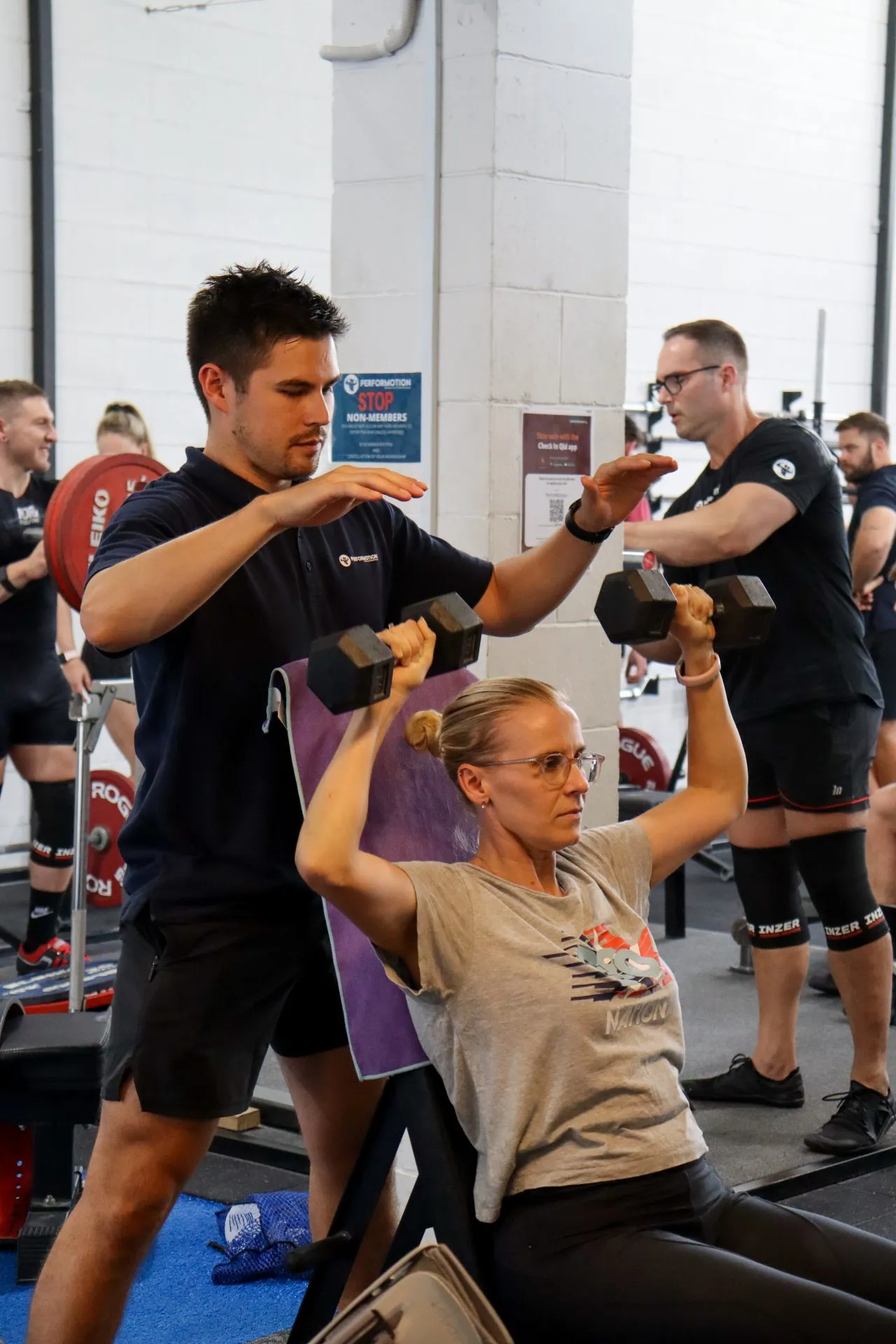
This is my strongest clinical opinion and I will not soften it. Women in their 40s and 50s should be lifting weights at moderate to high intensity at least two to three times per week. Not light weights for high repetitions. Not resistance bands as your only form of strength work. Actual progressive resistance training that challenges your muscles and gives them a reason to stay.
The evidence is unambiguous on this. Resistance training preserves muscle mass, increases bone density, improves insulin sensitivity, reduces cardiovascular risk, supports mental health, and directly improves quality of life in midlife women. A 2022 review published in Frontiers in Public Health found that strength training twice weekly significantly reduced the risk of sarcopenia and metabolic syndrome in middle-aged women. The American Heart Association guidelines recommend strength training targeting all major muscle groups at least twice weekly for adults in this age group.
I also want to address the fear I hear often: that lifting heavy will make women bulky. It will not. Women do not have the testosterone levels required for that outcome. What heavy lifting will do is make you stronger, leaner, more metabolically resilient, and more functionally capable as you age. That is the goal.
Include some form of high-impact activity.
Walking is valuable. Swimming is valuable. But high-impact activity, including running, jump training, or sport, provides a mechanical loading stimulus to bone that lower-impact exercise simply cannot replicate. Research from the British Journal of Sports Medicine confirms that high-impact weight-bearing exercise is one of the most effective tools for maintaining bone mineral density in perimenopausal and postmenopausal women.
If running is not appropriate for your joints or your history, there are alternatives. But do not remove all impact from your training without replacing it with something that provides equivalent bone loading stimulus. This is a conversation worth having with an Exercise Physiologist who can help you find the right fit for your body.
Eat more protein than you think you need.
For most women in their 40s and 50s, this means increasing protein intake meaningfully from their current baseline. Aim for 1.2 to 1.6 grams per kilogram of body weight daily, distributed across meals. Evidence from Stanford Lifestyle Medicine and published research in the American Journal of Clinical Nutrition consistently shows that spreading protein across three to four meals, with 0.4 to 0.6 grams per kilogram per meal, maximises muscle protein synthesis more effectively than consuming the same total amount in one or two larger serves.
Practical examples of protein-rich meals include eggs and chicken at breakfast, a protein-based lunch with a lean meat and grain combination, and a dinner built around 150 to 200 grams of lean protein with vegetables and a complex carbohydrate. The target is achievable but it does require intentionality, particularly if your current diet is built around lower-protein convenience foods.
If you have had children, see an Exercise Physiologist for your pelvic floor.
This is something I feel strongly about and it is not discussed nearly enough. Pregnancy, childbirth, and hormonal changes in perimenopause all affect pelvic floor function. Weakness or dysfunction in this area affects not just bladder control but also core stability, lower back health, and the ability to train effectively and safely. An Exercise Physiologist can assess your pelvic floor function and design a program that builds strength appropriately rather than inadvertently making dysfunction worse through inappropriate loading.
Nutrition Beyond Protein
Protein is the priority but it is not the whole picture.
Blood sugar management becomes increasingly important through the 40s and 50s as insulin sensitivity changes. Eating every three to four hours, pairing carbohydrates with protein and fat at every meal, and avoiding large gaps between meals all support stable blood sugar and reduce the hormonal fluctuations that drive fatigue, mood changes, and energy crashes.
Calcium and Vitamin D are non-negotiable for bone health at this stage. The recommended intake for women over 50 is 1200 milligrams of calcium daily from dietary sources, alongside Vitamin D levels maintained above 75 to 100 nmol/L for optimal bone and immune function.
Iron is another nutrient that women frequently under-monitor in this age group, particularly those still experiencing heavy or irregular periods in perimenopause. Low ferritin impairs cognitive function, energy, and exercise capacity well before haemoglobin levels fall into anaemia range. If you are experiencing unexplained fatigue, brain fog, or reduced exercise tolerance, ask your GP to test ferritin specifically, not just haemoglobin.
Hydration and electrolytes matter more than most women realise, particularly for those experiencing hormonal fluctuations that affect fluid and sodium balance. Consistent fluid intake throughout the day, rather than large amounts at once, supports cardiovascular function, energy, and recovery.
The Bigger Picture
Your 40s and 50s are not a decline. They are a transition that requires a different and more deliberate approach to how you move and eat.
The women I work with who thrive in this phase are not the ones doing the most. They are the ones doing the right things consistently. They lift regularly. They eat enough protein. They manage their blood sugar. They sleep. They do not let a difficult hormonal week become a difficult hormonal year by stopping altogether.
The research is clear and the clinical evidence I see every day supports it. Muscle mass, bone density, metabolic health, and cognitive function in your 50s and 60s are directly influenced by the choices you make now. This is not about aesthetics. It is about how you want to function for the next thirty years.
You still have time to build the foundation. But the best time to start is now.
Kelly Mann is an Exercise Physiologist, Powerlifting Coach, and Co-Director of Performotion in Teneriffe, Brisbane. Performotion works with women navigating hormonal changes, chronic illness, and the physical demands of midlife. To find out how we can support you, get in touch.